






HARP
SEAL
1.
Harp
Seal
is.
Story
of the
Seal
Number of the seals that
lives in the North
Atlantic of
Harp
Seal
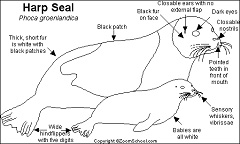
Size:
Full grown male is average of 169cm and the full grown
female is average of 162cm which is little smaller than the
male.
Weights
of the seal is average of 85 to 180kg, and during breeding
season, full grown seals weights about average of 135kg
which gets little heavier than normal season. Average length
of life is 35 years and
over.
Breeding:
Mother seals birth young ones on top of the ice around
middle of February to beginning of the March. Young seal’s
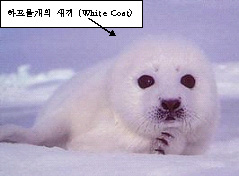
sizes are average of 85cm and weights around 11kg. Colors
at the birth are kind of yellow but it changes to be white
soon enough. So the baby seals are called ‘White Coat’.
This White Coat (Young Harp Seal) gains average of 3kg each
day which they are one of the fastest growing
mammalian.
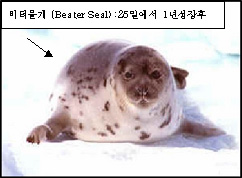
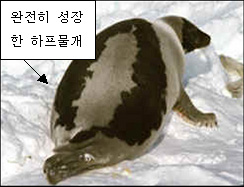
When they reach the 3 to 4 weeks old, their hair gets
shorter and black spots start to show in their body. Seals
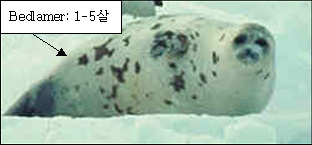
at this stage are called Beater Seal. Seal that is 1 to 5
years old are called Bedlamer, and harp shape spots gets
clear at this stage. Harp
Seal’s become adult when they reach 4 to
6 years old and at this time you can see their harp shape
spots very
clearly.
Habitation:
Harp
Seals are usually lives around the
North Pole and the ocean round the
north poles. They are mostly found in the White Sea which
located in north part of the
Number
of the Seal and the Replacement
Yield
Numbers of the seal are
approximately
counted with data based on the birth rates of the young
ones and the ages when they captured or
pregnant
rates of the females etc. Out of these data, the birth rate
which is replacement yields are very important guide line
that used to judge the numbers of the seals to capture to
maintain the population of the seal. These researches are
normally done by the visual researches using pictures
etc.
Harp
Seal is the one of the most populated breed around the
North Atlantic Oceans of the
2.
Excellence of the Harp Seal
Oil
Seal
Oil is the superior source of Omega-3 compare other fish
oils in many
ways.
Fish
oils contains only minimum of the DPA which as important as
the EPA and DHA. But the Seal Oil has about 10 times of DPA
compare to fish
oils.
The
facts that the 1/3 of the fatty acid from the Omega-3 is
made with DPA, caught the interests of scientists from the
Source supplier of DPA,
beside the Seal Oil is the mother’s milk and the mother’s
milk is essential for developing the infant’s vision and
the mentality etc. Recent studies showed that the lack of
DPA and Omega-3 fatty acids can cause the lagging ability
of the build the vision power and the nerve systems.
When
the most omega-3 from the fish oil is not match with
mother’s milk, Seal Oil’s fatty acid’s elements are closer
to the mother’s milk. Also, the Seal Oil has more of the
absorbing power to human body than the common fish
oil.
Contains of the Omega-3 from
the Seal Oil is about 20 to 25%, which is higher
than fish oils and it makes the Seal Oil excellent source
supplier for Omega-3. (Most common omega-3 from fish oil is
from the Salmon, and only 1, 2% of the salmon oil
is the omega-3. But the Seal Oil contains over 24%
of Omega-3 which make about 20 times differences). And
also, most fish oil
contains high cholesterol
but, Seal oil contains almost no
cholesterol.
Most of the
fish oil has known to contain almost none or very little of
DPA which is most valuable elements of the Omega-3. DPA
plays the important roles in removing the plaque and
softens the walls of the artery.
The reason of the Seal Oil
is better nutrient source than fish oil doesn’t stops here.
Fish oil is made with molecular
structure that is easy to oxidize, but the Seal Oil
doesn’t
oxidizes easy which proven by Nalka and
David’s
research.
Also, the Seal Oil contains
the large amount of Vitamin-E, Selenium and the
antioxidant
which prevents the bad odor caused by the oxidation. The
substances that developed while oxidation can be the cause
of the many diseases and the intakes of the antioxidant had
become necessary. Many healthy food markets are selling the
antioxidant products, now
days.
From the researches that
held about 10 years ago, the people from the Siorapaluk in
3. Elements comparison
| (Lipids, fatty acid classification) Fat % |
||||||||||||||||||||||||||||||||||||||||||||||||||||||||||||||||||||||||||||||||||||||||||||||||||||||||||||||||||||||||||||||||||||||||||
| ||||||||||||||||||||||||||||||||||||||||||||||||||||||||||||||||||||||||||||||||||||||||||||||||||||||||||||||||||||||||||||||||||||||||||
|
Effective Nutrient Comparison Based on 100g | ||||||||||||||||||||||||||||||||||||||||||||||||||||||||||||||||||||||||||||||||||||||||||||||||||||||||||||||||||||||||||||||||||||||||||
| ||||||||||||||||||||||||||||||||||||||||||||||||||||||||||||||||||||||||||||||||||||||||||||||||||||||||||||||||||||||||||||||||||||||||||
|
||||||||||||||||||||||||||||||||||||||||||||||||||||||||||||||||||||||||||||||||||||||||||||||||||||||||||||||||||||||||||||||||||||||||||
| ※ mark is the Essential Amino Acids (Seal meat contains plenty of the essential amino acids) |
||||||||||||||||||||||||||||||||||||||||||||||||||||||||||||||||||||||||||||||||||||||||||||||||||||||||||||||||||||||||||||||||||||||||||